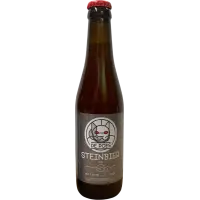
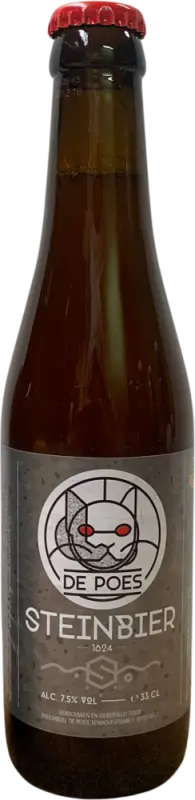
Steinbier
Brouwerij De Poes in Tielt, West Flanders, Belgium 🇧🇪
Belgian Style - Strong Ale Special|
Score
7.15
|
|
De Poes Steinbier? Een steenbier of "Steinbier" dus, we hebben dan ook besloten om een eigen interpretatie van deze historische Tieltse brouwstijl te brouwen.
Het bier is amberkleurig, natuurlijk troebel en is moutig van smaak en bevat licht gerookte aroma's. De Poes Steinbier is een ode aan de vroegere brouwkunst, waarbij we ook het brouwbeslag verhitten met gloeiende stenen. Een echte traditioneel gebrouwen specialiteit. 7.5 Vol % sterk.
De beschrijving zoals vermeld in 1624 "Practique om te brauwen voor myn alaam op syn Audenaersce" volgen we voor dit brouwsel zo getrouw mogelijk, dit zowel qua graan samenstelling (Gerst, Tarwe, Haver) als brouwwijze.
Steinbier is een bierstijl die teruggaat tot de vroegst gekende bierstijlen en werd tot begin 20 e eeuw nog in Oostenrijk (Karinthië) vervaardigd. Door de herontdekking van de beschrijving van het manuscript van de hand van stadsgenoot deken Joannes De Mol (° 1585 + 1657) werd duidelijk dat er ook in het toenmalige Vlaanderen gebruik gemaakt werd van stenen als technisch hulpmiddel om bier te brouwen.
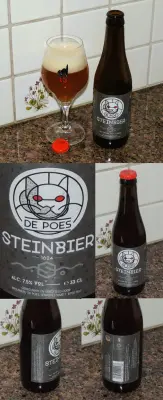
Het label, er is gekozen voor grijstinten als verwijzing naar gesteente. Het jaartal 1624 onder de naam is de verwijzing naar de bovenvermelde historische teksten vermelden we dan ook op het label van dit bier. De ogen van ons logo "De Poes" zijn vurig rood, als verwijzing naar de vlam waarmee de stenen verhit worden.
Het bier is amberkleurig, natuurlijk troebel en is moutig van smaak en bevat licht gerookte aroma's. De Poes Steinbier is een ode aan de vroegere brouwkunst, waarbij we ook het brouwbeslag verhitten met gloeiende stenen. Een echte traditioneel gebrouwen specialiteit. 7.5 Vol % sterk.
De beschrijving zoals vermeld in 1624 "Practique om te brauwen voor myn alaam op syn Audenaersce" volgen we voor dit brouwsel zo getrouw mogelijk, dit zowel qua graan samenstelling (Gerst, Tarwe, Haver) als brouwwijze.
Steinbier is een bierstijl die teruggaat tot de vroegst gekende bierstijlen en werd tot begin 20 e eeuw nog in Oostenrijk (Karinthië) vervaardigd. Door de herontdekking van de beschrijving van het manuscript van de hand van stadsgenoot deken Joannes De Mol (° 1585 + 1657) werd duidelijk dat er ook in het toenmalige Vlaanderen gebruik gemaakt werd van stenen als technisch hulpmiddel om bier te brouwen.
Het label, er is gekozen voor grijstinten als verwijzing naar gesteente. Het jaartal 1624 onder de naam is de verwijzing naar de bovenvermelde historische teksten vermelden we dan ook op het label van dit bier. De ogen van ons logo "De Poes" zijn vurig rood, als verwijzing naar de vlam waarmee de stenen verhit worden.
Sign up to add a tick or review
7/10
—
Appearance 6
Aroma 7
Flavor 7.5
Texture 6
Overall 7.5
Bottle from Hopduvel.
A: hazy orange, small, foamy, off-white head.
A: apricot, brioche, pear, vanilla, winegums, clove, cookie dough.
T: sweet pear & apricot, cookie dough & caramel, bit spicy.
F: floral, bit herbal hops, bitter & wry winegum, warming jenever-like alcohol.
P: medium body, oily texture, average carbonation.
Cleanly executed 'sweet and sticky' Belgian Strong, mkay.
A: hazy orange, small, foamy, off-white head.
A: apricot, brioche, pear, vanilla, winegums, clove, cookie dough.
T: sweet pear & apricot, cookie dough & caramel, bit spicy.
F: floral, bit herbal hops, bitter & wry winegum, warming jenever-like alcohol.
P: medium body, oily texture, average carbonation.
Cleanly executed 'sweet and sticky' Belgian Strong, mkay.
Tried
on 11 Jul 2026
at 10:47
7.4/10
—
Appearance 6
Aroma 7.5
Flavor 7.5
Texture 8
Overall 7.5
Lichtbruin troebel bier met schuim. Smaak is bitterzoet en licht kruidig met wat rook, karamel wat abrikoos en gras. Smaak is even wennen maar eigenlijk best een goed bier!
Tried
from Bottle
from
De Caigny Dranken
on 26 Jun 2026
at 12:57
8.3/10
—
Appearance 9
Aroma 8.5
Flavor 8
Texture 7
Overall 8.5
Gekocht op 14-01-2026 bij Drankencentrale Maes in Dendermonde. En thuis mijn verbaasde smaakpapillen kunnen verblijden op 14-06-2026.
Steinbier wordt gebrouwen bij brouwerij De Poes in Tielt.
Het begon allemaal in 2012, Stijn David beslist zijn passie voor bier te volgen en in 2014 richt hij Brouwerij De Poes op, deze dankt haar naam aan het favoriete huisdier van Stijn. De brouwinstallatie bestaat uit nieuwe en tweedehands onderdelen. Het Steinbier hier is een steenbier gebaseerd op een Tielts handschrift uit 1624. In de brouwerij kan je heel wat historische machines zien uit de brouwerijwereld, Stijn is namelijk een verwoed verzamelaar van brouwkundig erfgoed.
STEINBIER is een helder amberkleurig bier dat slechts weinig gebroken wit schuim produceert in de vorm van een gelijkmatige laag. Het blijft sterk aan je glaswand kleven maar het zakt al vlug in elkaar tot er nog slechts een fijn dun laagje op je bier blijft staan. De ganse bodem van de fles is nog bedekt met een stevig gistdepot en je ziet veel fijne CO2 belletjes naar omhoog parelen.
HET AROMA:
Zoetig, stropig, banaan, pruim, mout, beetje muf, kruidnagel.
DE SMAAK:
Zoetig, hopbittertje, karamel, banaan, mout.
HET MONDGEVOEL:
Volle body, licht bitterdroog, romige textuur en een platte koolzuur prikkeling.
DE NASMAAK:
Zoetig, karamel, hopbitter, licht gebrand, mout, koriander, wat verwarmende alcohol, een licht droog gevoel. Het bittere en de karamel vloeien lang uit.
HET TOTAALGEVOEL:
Een harmonieus bier.
HET VERDICT:
Geen slecht biertje, aangenaam zelfs, verrassend goed die steenbier methode.
Meer info en mijn befaamde sublieme foto’s kan je bewonderen bij:
http://www.beersfrombelgium.eu/nl/Steinbier-b-4797.html
Steinbier wordt gebrouwen bij brouwerij De Poes in Tielt.
Het begon allemaal in 2012, Stijn David beslist zijn passie voor bier te volgen en in 2014 richt hij Brouwerij De Poes op, deze dankt haar naam aan het favoriete huisdier van Stijn. De brouwinstallatie bestaat uit nieuwe en tweedehands onderdelen. Het Steinbier hier is een steenbier gebaseerd op een Tielts handschrift uit 1624. In de brouwerij kan je heel wat historische machines zien uit de brouwerijwereld, Stijn is namelijk een verwoed verzamelaar van brouwkundig erfgoed.
STEINBIER is een helder amberkleurig bier dat slechts weinig gebroken wit schuim produceert in de vorm van een gelijkmatige laag. Het blijft sterk aan je glaswand kleven maar het zakt al vlug in elkaar tot er nog slechts een fijn dun laagje op je bier blijft staan. De ganse bodem van de fles is nog bedekt met een stevig gistdepot en je ziet veel fijne CO2 belletjes naar omhoog parelen.
HET AROMA:
Zoetig, stropig, banaan, pruim, mout, beetje muf, kruidnagel.
DE SMAAK:
Zoetig, hopbittertje, karamel, banaan, mout.
HET MONDGEVOEL:
Volle body, licht bitterdroog, romige textuur en een platte koolzuur prikkeling.
DE NASMAAK:
Zoetig, karamel, hopbitter, licht gebrand, mout, koriander, wat verwarmende alcohol, een licht droog gevoel. Het bittere en de karamel vloeien lang uit.
HET TOTAALGEVOEL:
Een harmonieus bier.
HET VERDICT:
Geen slecht biertje, aangenaam zelfs, verrassend goed die steenbier methode.
Meer info en mijn befaamde sublieme foto’s kan je bewonderen bij:
http://www.beersfrombelgium.eu/nl/Steinbier-b-4797.html
Tried
from Bottle
from
Drankencentrale Maes
on 14 Jun 2026
at 16:17
7.3/10
—
Appearance 7
Aroma 7
Flavor 7.5
Texture 8
Overall 7
New beer by De Poes in Tielt and it is something worth investigating: Belgium's very first 'Steinbier', brewed with three different grains to a 17th-century recipe - apparently in that era, heating the wort by plunging red-hot rocks in it was more widespread than I thought, because in more recent times, 'Steinbier' (the German term gives it away) is more associated with Central Europe: the technique as such survived in Carinthia until the early 20th century and was famously revided by Leikeim in Bavaria in 2007. Several more have emerged since then, I even remember an American strong ale by The Bruery having undergone this treatment, but it never quite caught on even in craft beer times, I guess because it involves a lot of hassle especially in relation to the fairly limited flavour effects it has. In any case this 'Steinbier' should be seen as a method applicable to practically any beer style rather than as an actual beer style (comparable with a term like 'Eisbock') and in this case, De Poes simply applied it to a blonde ale of Belgian signature. Medium sized, egg-white, dense and tiny-bubbled, almost creamy, plastery-lacing, slowly breaking but generally very stable head on a misty peach blonde robe with metallic-orangey glow and disparate, fine sparkling. Aroma of halfripe banana, apple peel, cooked turnip, potato juice, sandwiches, a touch of caramel but not necessarily from the rocks, unsugared chewing gum, clove, white peach, thyme, chervil and hints of freshly struck matches and asphalt which must be the rocks. Sweetish, fruity onset, hints of halfripe peach, banana, pear and red apple peel, moderately carbonated with slight minerally effect - making it hard to determine whether there is also a minerally effect from the rocks. Supple, slick mouthfeel, bubblegummy esters and some residual sugars moving on top of a rounded-cereally pale maltiness with a thin caramelly edge - but again it remains difficult to pinpoint whether this caramelliness has anything to do with the rocks or not. Herbal and slightly leafy hop bitterness in the tail - again with a trace of lingering minerality, and again it remains nearly impossible to pick that out as an effect of the hot rocks. There is something vaguely 'caramelised' in the general taste that lingers a bit after swallowing and which I think is lacking in similar De Poes beers; I believe this is the most clear effect of this Steinbier treatment, but it too remains subtle and vague, too much so to make this creation stand out as something entirely new in Belgium purely flavour-wise. It got a bronze medal at the last edition of the Brussels Beer Challenge, but do not get distracted by that: just expect a rather 'ordinary', if technically well-executed, typical Belgian strong(ish) blonde.
Tried
on 06 Dec 2025
at 01:12