Vagrant's Pomona Project Cider Orchard No. 7
Vagrant Cider in Penryn, Cornwall, England 🏴
Cider - Dry Series|
Score
6.61
|
|
This cider was made in 2021 as part of the research carried out in writing 'A Vagrant's Pomona'. It is made entirely from fruit removed without the owner's permission and may or may not taste better for it.
Orchard 7
23-10-21 0915-1055 10°C misty and still
This is, without question, the strangest orchard I know
of anywhere. Truly. At some point a great deal of effort
has gone into the creation of this fruiting space and the
reasons for its making seem esoteric at best. Its apparent
strangeness lies in the presence of only two varieties.
Nothing particularly weird about that, many of the larger,
modern commercial orchards boast but a single variety.
What makes the choice bizarre in this instance is that
the two varieties are both very small, astringent, bitter,
sour apples which most people would describe as ‘crab’
apples (neither are M. sylvestris however – one I would
say is Golden Hornet and the other likely Evereste).
Again, one might expect to see a few of these varieties
scattered throughout an average commercial orchard, as
they perform as excellent pollinators, having a very long
flowering season and profuse pollen, but this orchard
consists exclusively of these trees. About thirty of them.
That’s a lot of crab apples. They are also arranged as ranks
progressing down the gentle slope of the ground here,
which is surrounded by a shelter belt of other species such
as ash, elm and alder. These trees are well protected and
crop heavily as a result. What also adds to the strangeness
is that they are all clearly grafted on the same standard
(assume M25) rootstocks and consequently have grown
into large, vigorous, spread-crowned trees. None appear
to have ever been pruned and as a result, are all a riot of
tangled growth interwoven with bramble and a few grape
vines. I would guess the age at about 35-45 years (although
it’s sometimes hard to judge down here) with the shelter
belts obviously planted at the same time. There are five or
six pear trees mixed among the shelter trees which show no
signs of graft unions so can only assume Pyrus communis
half sibs planted as bare root whips among a mix of other
trees – no fruit on those this year, but you can be absolutely
certain I’ll be back there to check them next year. Wild
pears are like a dog who speaks Norwegian in Cornwall.
My speculation on the planting of this orchard is about
sheep or cows. Just because I’ve not seen it anywhere else,
doesn’t mean it hasn’t happened. This looks to me like a
silvopastural experiment given the arrangement of the
trees on the land – in high summer the trees provide deep
shade protection for the animals, whilst in autumn, the
fruit provides extra calories for the livestock. What is
interesting though, is that the designer of the space has
been very specific about the nature of the trees: If they
had simply chosen bareroot M. sylvestris whips the same
objective would be met at a fraction of the cost – the
morphology of the trees would be varied and the resulting
fruit would show just as much variation given the fact
that the tree nursery, whilst it might collect seed from a
true M. syvestris, has definitely not gone to the trouble
of pollinating flowers by hand with pollen from another
true crab, therefore, the other parent of the seed generated
will be whatever pollen happens to be (bee) available
nearby. These trees however, have been specifically chosen
varieties, grafted on to known stocks to give a predicted
outcome. It’s wacky in the extreme and I absolutely love it!
The orchard lies along of a lane which is the only route in
and out of the nearby village and consequently, traffic is
light but regular. There’s also very little disguising what’s
going on here with regard to parking position – there’s
only one sensible place to park nearby and it’s pretty close
to the entrance of the orchard. Once inside however, it’s
relatively protected from sight of the road. I park up on
this misty, still morning and grab the bag to take a look
– it seems pointless lugging all the kit down there if the
fruit isn’t even ripe. So I take a look and while some of the
Evereste are yet to reach full ripeness, the Golden Hornet
are definitely ready to rock and are starting to drop nicely,
consequently, they’ll form about 80% of the blend. I grab
about half a bag full off a couple of trees and head back to
the car for the rest of the gear. Armed with panking pole,
tarp, bags, tripod and camera, I clumsily make my way
back to the gate and scramble in.
Picking these little gems up out of the relatively long grass
is an absolute pain in the sack, hence the tarp and pole.
I set the tarp up under the first tree then get the tripod
up and ready – still not comfortable with the extra kit
and time spent faffing around. Back to the tree and am
given pause to consider what’s about to happen. As I
mentioned, it’s a very still morning and whilst the mist
has a slightly suppressing quality, it occurs to me that
as soon as I start with the pole, it’s going to sound like a
hailstorm on a plastic roof! The owners of this plot live
about a mile away, but the previous owners live a good
stone’s throw from where I’m stood. I worry about the
noise for at least eight seconds before giving it laldy with
the pole and am rewarded with a personal pelting and
the anticipated staccato burst of extreme gravitational
activity – very satisfying. Once the fruit is on the tarp it
can be manoeuvred into a useful confluence for placing in
the bag. One drawback of gathering such tiny fruit in this
way is that it’s difficult to separate the rotters and the leaves
from what’s useful, so that’ll take place in the wash tub. I
hear a car pull in to the lower gate entrance at one point
and scuttle around the corner to peer in that direction in
case the owners are here to check on the sheep (not that
I’ve seen them, but the evidence of their presence is here) or
they suspect, from the parked car up the lane that there’s a
miscreant on the rob, but after a few minutes it’s still quiet,
so I move the tarp and set to again. It takes an awful lot of
these little ones to fill two bags, but I get there eventually. I
rather suspect this will be the strangest blend in the series.
Orchard 7
23-10-21 0915-1055 10°C misty and still
This is, without question, the strangest orchard I know
of anywhere. Truly. At some point a great deal of effort
has gone into the creation of this fruiting space and the
reasons for its making seem esoteric at best. Its apparent
strangeness lies in the presence of only two varieties.
Nothing particularly weird about that, many of the larger,
modern commercial orchards boast but a single variety.
What makes the choice bizarre in this instance is that
the two varieties are both very small, astringent, bitter,
sour apples which most people would describe as ‘crab’
apples (neither are M. sylvestris however – one I would
say is Golden Hornet and the other likely Evereste).
Again, one might expect to see a few of these varieties
scattered throughout an average commercial orchard, as
they perform as excellent pollinators, having a very long
flowering season and profuse pollen, but this orchard
consists exclusively of these trees. About thirty of them.
That’s a lot of crab apples. They are also arranged as ranks
progressing down the gentle slope of the ground here,
which is surrounded by a shelter belt of other species such
as ash, elm and alder. These trees are well protected and
crop heavily as a result. What also adds to the strangeness
is that they are all clearly grafted on the same standard
(assume M25) rootstocks and consequently have grown
into large, vigorous, spread-crowned trees. None appear
to have ever been pruned and as a result, are all a riot of
tangled growth interwoven with bramble and a few grape
vines. I would guess the age at about 35-45 years (although
it’s sometimes hard to judge down here) with the shelter
belts obviously planted at the same time. There are five or
six pear trees mixed among the shelter trees which show no
signs of graft unions so can only assume Pyrus communis
half sibs planted as bare root whips among a mix of other
trees – no fruit on those this year, but you can be absolutely
certain I’ll be back there to check them next year. Wild
pears are like a dog who speaks Norwegian in Cornwall.
My speculation on the planting of this orchard is about
sheep or cows. Just because I’ve not seen it anywhere else,
doesn’t mean it hasn’t happened. This looks to me like a
silvopastural experiment given the arrangement of the
trees on the land – in high summer the trees provide deep
shade protection for the animals, whilst in autumn, the
fruit provides extra calories for the livestock. What is
interesting though, is that the designer of the space has
been very specific about the nature of the trees: If they
had simply chosen bareroot M. sylvestris whips the same
objective would be met at a fraction of the cost – the
morphology of the trees would be varied and the resulting
fruit would show just as much variation given the fact
that the tree nursery, whilst it might collect seed from a
true M. syvestris, has definitely not gone to the trouble
of pollinating flowers by hand with pollen from another
true crab, therefore, the other parent of the seed generated
will be whatever pollen happens to be (bee) available
nearby. These trees however, have been specifically chosen
varieties, grafted on to known stocks to give a predicted
outcome. It’s wacky in the extreme and I absolutely love it!
The orchard lies along of a lane which is the only route in
and out of the nearby village and consequently, traffic is
light but regular. There’s also very little disguising what’s
going on here with regard to parking position – there’s
only one sensible place to park nearby and it’s pretty close
to the entrance of the orchard. Once inside however, it’s
relatively protected from sight of the road. I park up on
this misty, still morning and grab the bag to take a look
– it seems pointless lugging all the kit down there if the
fruit isn’t even ripe. So I take a look and while some of the
Evereste are yet to reach full ripeness, the Golden Hornet
are definitely ready to rock and are starting to drop nicely,
consequently, they’ll form about 80% of the blend. I grab
about half a bag full off a couple of trees and head back to
the car for the rest of the gear. Armed with panking pole,
tarp, bags, tripod and camera, I clumsily make my way
back to the gate and scramble in.
Picking these little gems up out of the relatively long grass
is an absolute pain in the sack, hence the tarp and pole.
I set the tarp up under the first tree then get the tripod
up and ready – still not comfortable with the extra kit
and time spent faffing around. Back to the tree and am
given pause to consider what’s about to happen. As I
mentioned, it’s a very still morning and whilst the mist
has a slightly suppressing quality, it occurs to me that
as soon as I start with the pole, it’s going to sound like a
hailstorm on a plastic roof! The owners of this plot live
about a mile away, but the previous owners live a good
stone’s throw from where I’m stood. I worry about the
noise for at least eight seconds before giving it laldy with
the pole and am rewarded with a personal pelting and
the anticipated staccato burst of extreme gravitational
activity – very satisfying. Once the fruit is on the tarp it
can be manoeuvred into a useful confluence for placing in
the bag. One drawback of gathering such tiny fruit in this
way is that it’s difficult to separate the rotters and the leaves
from what’s useful, so that’ll take place in the wash tub. I
hear a car pull in to the lower gate entrance at one point
and scuttle around the corner to peer in that direction in
case the owners are here to check on the sheep (not that
I’ve seen them, but the evidence of their presence is here) or
they suspect, from the parked car up the lane that there’s a
miscreant on the rob, but after a few minutes it’s still quiet,
so I move the tarp and set to again. It takes an awful lot of
these little ones to fill two bags, but I get there eventually. I
rather suspect this will be the strangest blend in the series.
Sign up to add a tick or review
6.9/10
—
Appearance 8
Aroma 6.5
Flavor 6.5
Texture 8
Overall 6.5
Panda at home, thanks to Ed Danlo, 13/09/2026.
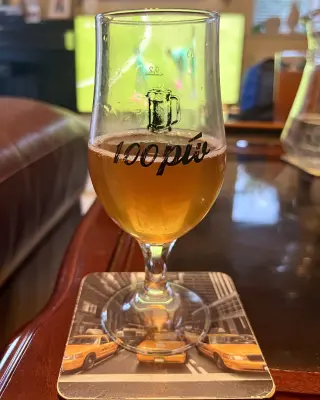
Almost clear golden to copper with a just off white cap that thins to a swirl.
Nose is earthy apple, herb, hedgerow, straw.
Taste comprises apple core, light funk, tannins, straw.
Medium bodied, moderate carbonation, drying close.
Okay.
Almost clear golden to copper with a just off white cap that thins to a swirl.
Nose is earthy apple, herb, hedgerow, straw.
Taste comprises apple core, light funk, tannins, straw.
Medium bodied, moderate carbonation, drying close.
Okay.
Tried
on 13 Sep 2026
at 15:42
6.3/10
—
Appearance 7
Aroma 6.5
Flavor 6
Texture 6
Overall 6
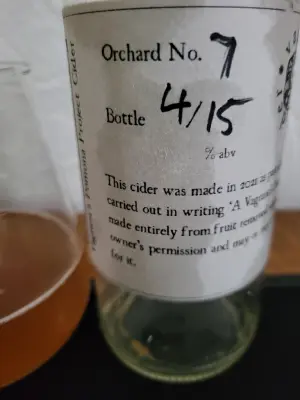
500ml bottle from Vagrant's Pomona Project "The Session" set. Orchard No. 7, Bottle 4/15. Hazed deep orangey amber gold colour, bubbly head that dissipates to a white foam rim and aroma of ripe fruit, jelly. Taste is astringent, aspirin, crab appley, fleshy, fruity, with drying bitter tannin. Medium bodied, low carbonation, astringent bitter tannic finish. Abit harsh, quite OK.
Tried
from Bottle
on 24 May 2026
at 19:21