Vagrant's Pomona Project Cider Orchard No. 11
Vagrant Cider in Penryn, Cornwall, England 🏴
Cider - Dry Series|
Score
6.78
|
|
This cider was made in 2021 as part of the research carried out in writing 'A Vagrant's Pomona'. It is made entirely from fruit removed without the owner's permission and may or may not taste better for it.
Orchard 11
3-11-21 1540-1750 Clear and cold 5°C
The last in the planned sequence of orchards for
this project. Again, land on which I’ve spent much
time. This is the largest of all orchards in the series at
approximately forty acres divided into eight blocks
of Bramley and Cox on M26 stocks, planted in the
mid-eighties and managed as a bush orchard in central
leader form, the trees are spaced at eight feet apart and
have a combination of Red Falstaff (assume it’s this –
very late ripening and self-fertile), Golden Hornet and
an unidentified tiny yellow crab apple, very fastigiate
form with dynamite flavour as pollinators.
Again, the only taker for assistance here was Morts,
bless him, and he made the proviso that he wasn’t
carrying any more fruit, but was quite happy to keep
me company and take some photos. Sensible lad.
I’m a bit late to the party here and thought this might
be the case – most of the dessert and culinary fruit
are gathered in from late September to mid-October
while the sun still shines, fruit abscission has not
begun in earnest and the rains have not yet turned the
orchards to a claggy nightmare for tractor drivers and
managers alike. And I’m right. The Bramleys are all
gathered and it requires some poking about on lower
branches and searching for unblemished windfalls to
make the quota on these, but the lurking giants remain,
unfeasible in stature and brutal in acidity, so I grab
the necessary. The Cox blocks are on the other side of
the orchard and to get to them, I must pass another
of the remaining blocks of traditional orchard in the
area, also Bramleys and of a similar age to our plot,
may even have been planted at the same time, no one
alive to tell. This small haven is in an even further
state of decline than our own, having been entirely
abandoned to the whim of the world by a forward thinking
owner. The block is also positioned to access
the greatest possible connectivity with surrounding
woodland and significant hedgerows. The grass was
last mowed in this block in 2001, consequently, the
oaks planted by squirrels and jays are now half again
as high as the apple trees between which they grow,
the collapsing Bramleys are festooned in bramble
tents and the herb layer grows thick, rich and rank.
There are voles, badgers, foxes, owls, woodpeckers,
nuthatch, treecreepers, among a riot of diversity
nearly completely absent from the surrounding blocks
managed for commercial production.
We pass this oasis by and duck through the overstood
hazel hedge into the principal Cox block and are
astonished to find the trees unpicked and the majority
of the fruit rotting on the ground. It’s too early for the
cloud of redwing which will soon pick this orchard
clean, so for the moment, there’s about one hundred
and fifty tonnes of fruit going wanting. Late for Cox
this and most of the fruit on the ground has gone too
mealy to be of any use to me now, but I can see what
a weird year it’s been for these trees because the fruit
is absolutely enormous, almost as big as the Bramleys,
even what remains improbably hanging on the trees,
in many instances deeply split under its own fullness.
However, the hanging fruit retains crispness and juice
which is what I need for pressing them, so another haul
from here. The fruit has been left to rot because there
is no labour available at a cost which justifies the price
at market. There are various reasons why this should
be the case. The scale of land in the UK managed as
orchard has shrunk about a third, equivalent of over
fifty thousand acres, in the last twenty or so years. Bush
orchards such as these are coming to the end of their
useful productive life and are being grubbed out at a
time when the popularity of the varieties grafted on
them are in massive decline. This is not about the age
of the trees necessarily, as left to their own devices, they
would grow much larger, choking the avenues between
the rows, continuing to bear fruit for many years. This
is more about the difficulty in managing the renewal
pruning of the trees in a profitable way. The Cox was
once the UK’s favourite dessert fruit with the foaming
texture and highly aromatic flavour reminiscent of
many childhoods (at least for those of us of a certain
age) and this is another nail in the coffin of these
varieties: folk now buying fruit in supermarkets had
other varieties as kids, largely due to the supermarkets
themselves and whereas the buying of local produce
was a bit of a mark of pride in many households (and
a tiny political gesture in some instances – my mum
would never have Cape fruit on our table), we are
now presented with Portuguese Gala by Sainsbury’s
in October. Tis a strange thing and results in a gross
simplification of available produce. The decline of Cox’
popularity means a lower price at market – 150 tonnes
now goes a very long way of something which doesn’t
keep well. The knock-on is obviously a profit margin
close to zero and when the labour gangers command a
higher price to put a team on the ground (I’m not for
a single moment suggesting the pickers themselves are
being paid more) because there’s a massive shortage of
available labour (Nice one 52%, Boris got that one done
for you) suddenly, there’s no commercially viable way to
get these fruit from the orchard. Aside from which, Cox
are an utter bastard to grow successfully. Expect Gala.
Lots of Gala. From overseas. At a high price. Until it
can’t be grown there, or exported. What then?
So it fills me with a massive sadness to see these
once venerated fruit rotting. Aside from the colossal
and avoidable waste, it feels like the ship for the
Summerlands has set sail on these varieties. Maybe no
one else gives a shit and when it actually comes down
to it I’m not sure I do either. Not because I’ll be sad not
to be able to get them again, that won’t happen for me.
I’ll definitely have Bramley and Cox grafted on cheap
M. sylvestris half sib stocks by this time next year and
there’ll be fruit available for you in the future if you can
be fucked to come and get it.
With regard to the cider to be made from this orchard,
again, if I were to simply ferment the principal players
here, I’d end up with something that had a fairly
screaming acidity tempered only by the aromatic
quality of the Cox, thin and pale. It might work, but
would likely be a bit challenging. This is where two
of the pollinators in the orchard come out to play,
Golden Hornet (also becoming incredibly mealy by
this time with more black than yellow fruit remaining
on the trees) and this tiny butter-yellow crab, just
ripe and looking extremely helpful. About the size of
a blackcurrant, they’re loaded with tannin and very
astringent, it might save the day. They are very, very
small though and not being keen to readily absciss just
yet, they require picking directly from the tree. They
come away in handfuls and I feel like I’m gathering
as much leaf as fruit. It takes bloody ages and while
I’m dicking about with these tiny apples, it gets
dark. I’m pretty sure it’ll be worth the effort though
and it’s possible this blend might taste like Autumn
morning break at my primary school (not actually –
my childhood wasn’t so edgy or unsafe as to include
morning consumption of cider before the age of eleven).
Either way, it’s definitely a Kent blend and all the better
for it. I’m off for jacket potatoes, pumpkin soup and
roman candles.
Orchard 11
3-11-21 1540-1750 Clear and cold 5°C
The last in the planned sequence of orchards for
this project. Again, land on which I’ve spent much
time. This is the largest of all orchards in the series at
approximately forty acres divided into eight blocks
of Bramley and Cox on M26 stocks, planted in the
mid-eighties and managed as a bush orchard in central
leader form, the trees are spaced at eight feet apart and
have a combination of Red Falstaff (assume it’s this –
very late ripening and self-fertile), Golden Hornet and
an unidentified tiny yellow crab apple, very fastigiate
form with dynamite flavour as pollinators.
Again, the only taker for assistance here was Morts,
bless him, and he made the proviso that he wasn’t
carrying any more fruit, but was quite happy to keep
me company and take some photos. Sensible lad.
I’m a bit late to the party here and thought this might
be the case – most of the dessert and culinary fruit
are gathered in from late September to mid-October
while the sun still shines, fruit abscission has not
begun in earnest and the rains have not yet turned the
orchards to a claggy nightmare for tractor drivers and
managers alike. And I’m right. The Bramleys are all
gathered and it requires some poking about on lower
branches and searching for unblemished windfalls to
make the quota on these, but the lurking giants remain,
unfeasible in stature and brutal in acidity, so I grab
the necessary. The Cox blocks are on the other side of
the orchard and to get to them, I must pass another
of the remaining blocks of traditional orchard in the
area, also Bramleys and of a similar age to our plot,
may even have been planted at the same time, no one
alive to tell. This small haven is in an even further
state of decline than our own, having been entirely
abandoned to the whim of the world by a forward thinking
owner. The block is also positioned to access
the greatest possible connectivity with surrounding
woodland and significant hedgerows. The grass was
last mowed in this block in 2001, consequently, the
oaks planted by squirrels and jays are now half again
as high as the apple trees between which they grow,
the collapsing Bramleys are festooned in bramble
tents and the herb layer grows thick, rich and rank.
There are voles, badgers, foxes, owls, woodpeckers,
nuthatch, treecreepers, among a riot of diversity
nearly completely absent from the surrounding blocks
managed for commercial production.
We pass this oasis by and duck through the overstood
hazel hedge into the principal Cox block and are
astonished to find the trees unpicked and the majority
of the fruit rotting on the ground. It’s too early for the
cloud of redwing which will soon pick this orchard
clean, so for the moment, there’s about one hundred
and fifty tonnes of fruit going wanting. Late for Cox
this and most of the fruit on the ground has gone too
mealy to be of any use to me now, but I can see what
a weird year it’s been for these trees because the fruit
is absolutely enormous, almost as big as the Bramleys,
even what remains improbably hanging on the trees,
in many instances deeply split under its own fullness.
However, the hanging fruit retains crispness and juice
which is what I need for pressing them, so another haul
from here. The fruit has been left to rot because there
is no labour available at a cost which justifies the price
at market. There are various reasons why this should
be the case. The scale of land in the UK managed as
orchard has shrunk about a third, equivalent of over
fifty thousand acres, in the last twenty or so years. Bush
orchards such as these are coming to the end of their
useful productive life and are being grubbed out at a
time when the popularity of the varieties grafted on
them are in massive decline. This is not about the age
of the trees necessarily, as left to their own devices, they
would grow much larger, choking the avenues between
the rows, continuing to bear fruit for many years. This
is more about the difficulty in managing the renewal
pruning of the trees in a profitable way. The Cox was
once the UK’s favourite dessert fruit with the foaming
texture and highly aromatic flavour reminiscent of
many childhoods (at least for those of us of a certain
age) and this is another nail in the coffin of these
varieties: folk now buying fruit in supermarkets had
other varieties as kids, largely due to the supermarkets
themselves and whereas the buying of local produce
was a bit of a mark of pride in many households (and
a tiny political gesture in some instances – my mum
would never have Cape fruit on our table), we are
now presented with Portuguese Gala by Sainsbury’s
in October. Tis a strange thing and results in a gross
simplification of available produce. The decline of Cox’
popularity means a lower price at market – 150 tonnes
now goes a very long way of something which doesn’t
keep well. The knock-on is obviously a profit margin
close to zero and when the labour gangers command a
higher price to put a team on the ground (I’m not for
a single moment suggesting the pickers themselves are
being paid more) because there’s a massive shortage of
available labour (Nice one 52%, Boris got that one done
for you) suddenly, there’s no commercially viable way to
get these fruit from the orchard. Aside from which, Cox
are an utter bastard to grow successfully. Expect Gala.
Lots of Gala. From overseas. At a high price. Until it
can’t be grown there, or exported. What then?
So it fills me with a massive sadness to see these
once venerated fruit rotting. Aside from the colossal
and avoidable waste, it feels like the ship for the
Summerlands has set sail on these varieties. Maybe no
one else gives a shit and when it actually comes down
to it I’m not sure I do either. Not because I’ll be sad not
to be able to get them again, that won’t happen for me.
I’ll definitely have Bramley and Cox grafted on cheap
M. sylvestris half sib stocks by this time next year and
there’ll be fruit available for you in the future if you can
be fucked to come and get it.
With regard to the cider to be made from this orchard,
again, if I were to simply ferment the principal players
here, I’d end up with something that had a fairly
screaming acidity tempered only by the aromatic
quality of the Cox, thin and pale. It might work, but
would likely be a bit challenging. This is where two
of the pollinators in the orchard come out to play,
Golden Hornet (also becoming incredibly mealy by
this time with more black than yellow fruit remaining
on the trees) and this tiny butter-yellow crab, just
ripe and looking extremely helpful. About the size of
a blackcurrant, they’re loaded with tannin and very
astringent, it might save the day. They are very, very
small though and not being keen to readily absciss just
yet, they require picking directly from the tree. They
come away in handfuls and I feel like I’m gathering
as much leaf as fruit. It takes bloody ages and while
I’m dicking about with these tiny apples, it gets
dark. I’m pretty sure it’ll be worth the effort though
and it’s possible this blend might taste like Autumn
morning break at my primary school (not actually –
my childhood wasn’t so edgy or unsafe as to include
morning consumption of cider before the age of eleven).
Either way, it’s definitely a Kent blend and all the better
for it. I’m off for jacket potatoes, pumpkin soup and
roman candles.
Sign up to add a tick or review
7.1/10
—
Appearance 8
Aroma 7
Flavor 6.5
Texture 8
Overall 7
Panda at home, thanks to Ed Danlo, 13/09/2026.
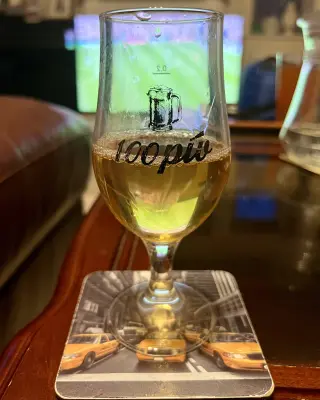
Clear golden topped with a white crown that escapes to the edge.
Nose is crisp apple, tannins, light farmyard dusting.
Taste comprises apple skins, herb, straw, vinous.
Medium bodied, moderate carbonation, drying close.
Fine.
Clear golden topped with a white crown that escapes to the edge.
Nose is crisp apple, tannins, light farmyard dusting.
Taste comprises apple skins, herb, straw, vinous.
Medium bodied, moderate carbonation, drying close.
Fine.
Tried
on 13 Sep 2026
at 15:35
6.6/10
—
Appearance 6
Aroma 6.5
Flavor 7
Texture 6
Overall 7
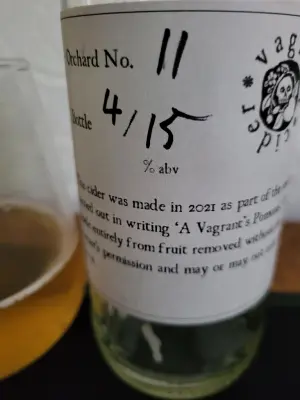
Final 500ml bottle from Vagrant's Pomona Project "The Session" set. Orchard No. 11, Bottle 4/15. Golden colour, white foam head that dissipates to a thin rim and aroma of apple, fruit, flesh, core. Taste is tangy, tart, fruity, appley, some core, mineral note, with drying acidity. Medium bodied, light carbonation, dry mellow acidic finish. Quite drinkable.
Tried
from Bottle
on 25 May 2026
at 19:16